Introduction
Water is the most expensive input for many Pakistani farms. Diesel and electric tubewells run on fuel or grid power that cost more every year, and both stop when the supply fails. A solar pump removes that recurring cost. It uses energy from panels during daylight to lift water from a borehole, canal, or storage tank, with no fuel to buy and very little routine upkeep.
This does not mean every system suits every site. Pump size, water depth, daily irrigation hours, and inverter choice all affect whether a solar pumping system delivers the water you need. This guide explains the main types, how to size a solar water pump correctly, how solar tube well systems are priced in Pakistan, and what to check before buying.
How a Solar Pump Works
A solar pump system has four main parts:
- Solar panels that convert sunlight into DC electricity
- A pump controller or inverter that matches panel output to the pump motor
- The pump itself, either submersible for deep wells or surface for canals and tanks
- Mounting structure and cabling designed for outdoor exposure
The controller tracks the best operating point of the panels and adjusts motor speed. On a bright day, the pump runs at full speed. On a cloudy day, it runs slower. Many systems can also store water in a tank so irrigation continues when the sun drops.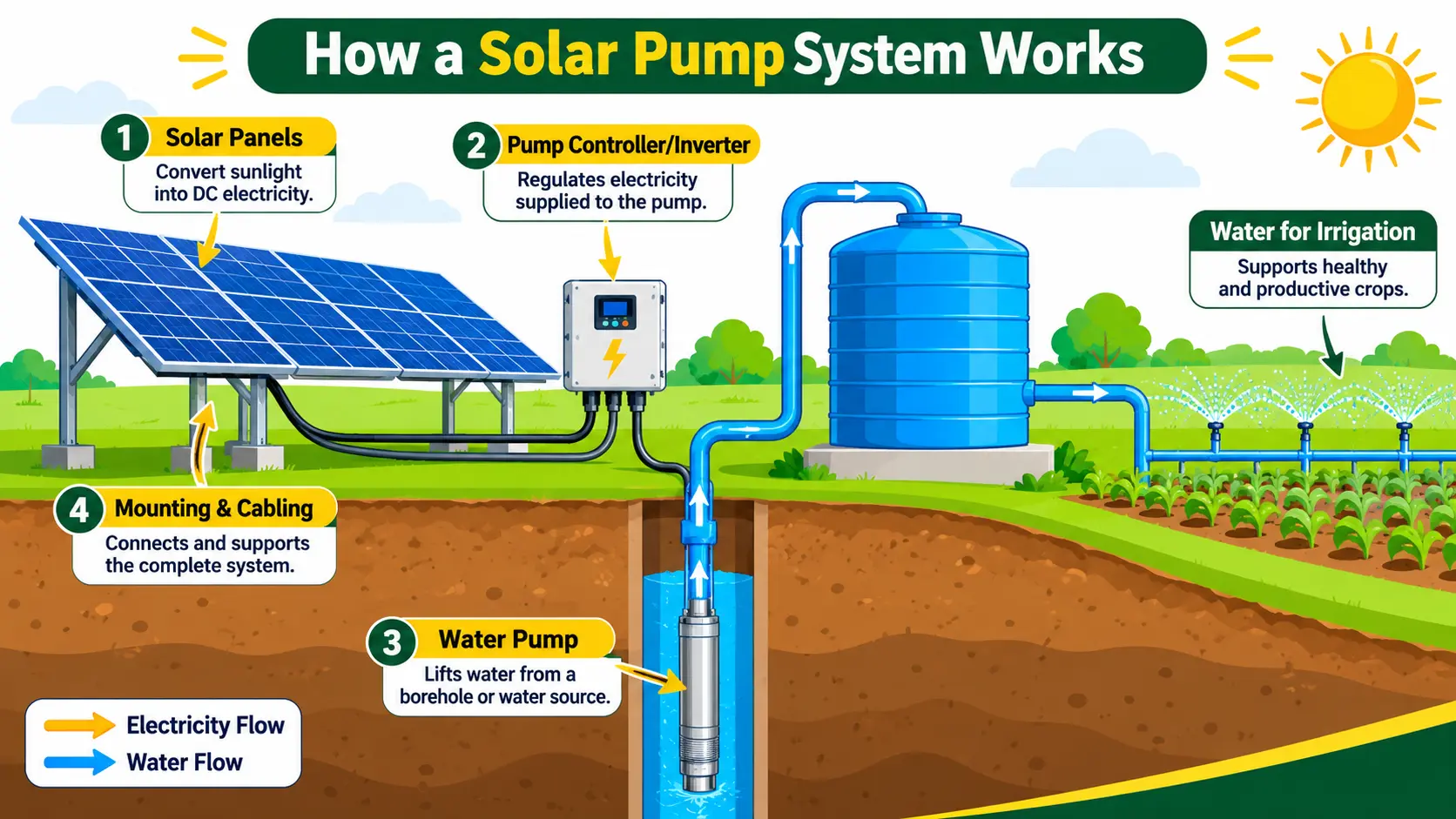
DC Solar Pumps vs AC Solar Pumps
The first technical choice is between DC and AC pump systems.
DC solar pumps run directly from solar panels through a DC controller, with no conversion to AC. This route is usually more efficient for small pumps. Industry comparisons often cite about 20 to 30% more pumping output per solar watt for DC systems in the appropriate power range. The limitation is size. Most DC pumps suit smaller loads, often under about 5 horsepower, which makes them a good fit for home gardens, livestock, and small farms.
AC solar pumps use a solar inverter to drive a standard AC motor. They handle higher power and are easier to match with common local motors and spare parts. They cost more in conversion losses but scale better for larger tubewells.
For a small plot with a shallow well, a DC system may be simplest. For a deep tubewell serving several acres, an AC system with a properly matched inverter is usually the practical choice.
Submersible vs Surface Solar Pumps
Submersible pumps sit underwater inside a borehole or deep well. They are quiet, protected from weather, and standard for tubewell irrigation. The depth of the water table determines the pump head and motor power needed.
Surface pumps sit above ground near a canal, pond, or shallow well. They are cheaper to access and maintain but need a suction line and are limited by suction lift. They suit shallow water sources and farm supply.
Choose the pump type based on where the water is. A borehole measurement comes before any other specification.
How to Size a Solar Tubewell
Correct sizing prevents two common failures: a pump that cannot lift enough water, and a system that runs hot and fails early.
Step 1: Measure the water table and required head. Know the static water level in the borehole and the vertical height to the outlet. Add friction loss from the pipe length and diameter.
Step 2: Estimate daily water need. Calculate litres or gallons per acre for your crop and irrigation method. Multiply by the number of acres and the irrigation days.
Step 3: Set daily pumping hours. Solar pumps work best when the required water is delivered in the peak sun window. Plan for the number of effective full-sun hours at your site, not the total daylight hours.
Step 4: Select the motor horsepower. Match the pump flow and head to the motor rating. Overspecifying wastes energy and panel area. Underspecifying leaves the crop short of water.
Step 5: Size the panel array. Panel capacity must cover the motor power at peak conditions, with allowance for dust, heat, and temperature derating. Many installers size panels at a higher ratio than the motor rating to compensate for these losses.
Step 6: Confirm the controller. The VFD or pump inverter must match motor voltage, phase, and maximum current. A mismatch is a common source of failure.
A professional site survey should confirm these numbers before purchase.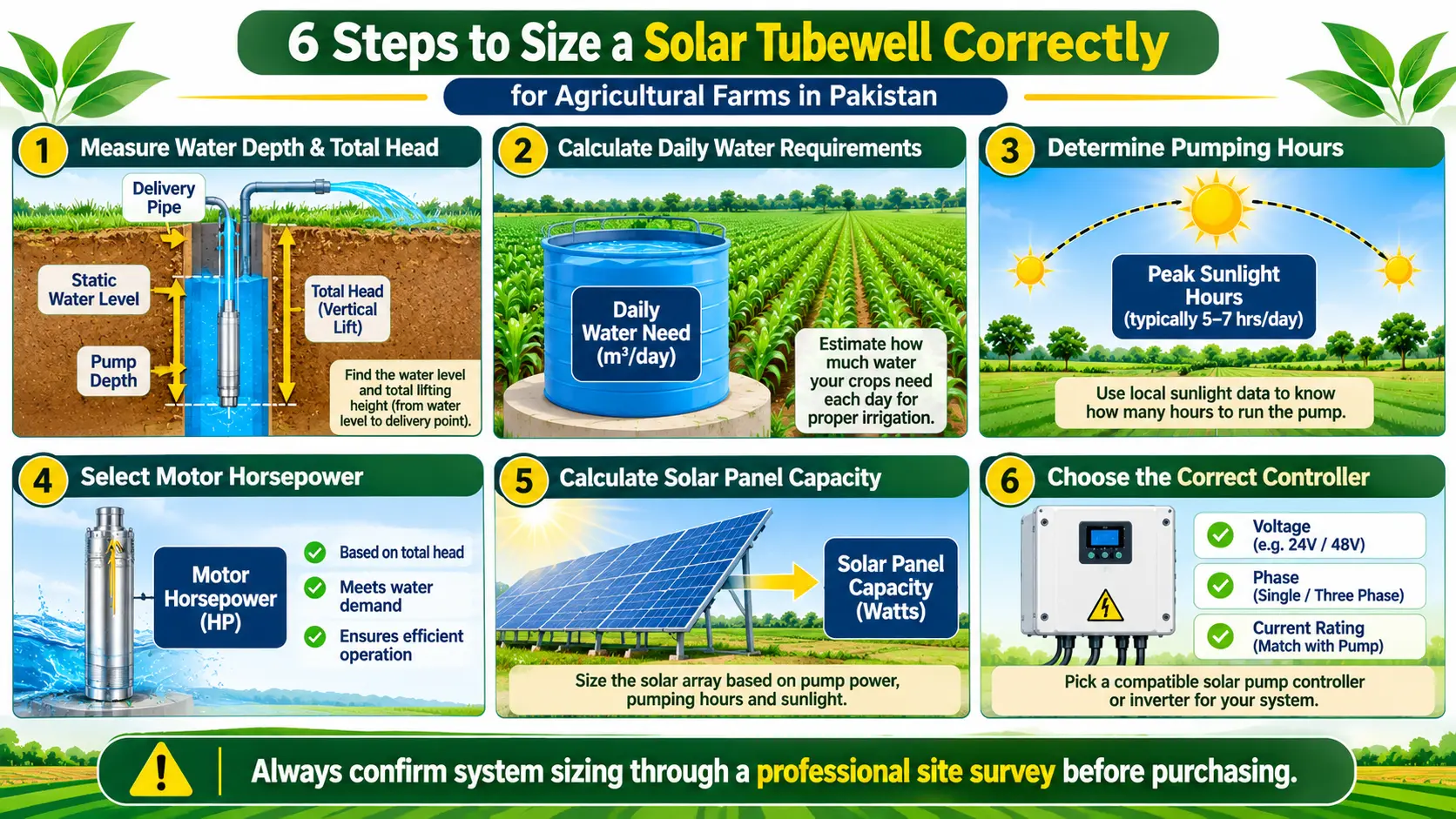
Solar Tube Well Price in Pakistan
Solar tube well pricing in Pakistan varies widely in current listings. Some dealers quote systems for a 5HP unit at a few lakh rupees for a basic package, while others quote a complete system with larger panel arrays, deeper pumps, and mounting work at much higher totals. Quoted figures are often not comparable because they include different panel brands, controller types, and whether installation is included.
For planning purposes, a reasonable range for a complete 5HP solar tubewell system in 2026 is roughly PKR 400,000 to 1,200,000 depending on specification and scope. Larger systems for 10HP and above cost substantially more. Use these figures only as a starting point and request a written quote that lists each component.
Pricing is also affected by the borehole. A shallow well with a standard motor is far cheaper to equip than a deep borehole that needs a high-head submersible pump and extra panels.
Subsidy programs for agricultural solar tubewells have been announced in some provinces. Eligibility, funding, and application windows change, so check directly with the provincial agriculture department or an authorized dealer before assuming any subsidy applies.
Diesel and Electricity Costs: The Real Comparison
The case for solar is strongest when compared against the cost you already pay. Diesel pumps carry fuel, maintenance, and downtime costs every season. Electric tubewells carry tariff costs, and in areas with load shedding, pumping hours become unreliable.
A basic comparison for one season:
- Total hours pumped per season
- Fuel or electricity used per hour at current prices
- Maintenance and repair costs
- Lost crop value from downtime
- Annual cost of the solar system including amortization
Many farmers find the payback period compares well with diesel use in heavy seasons, especially when pumping hours are high. The exact payback depends on local prices and usage, so calculate it using your own records.
Choosing Components for Reliability
Panels. Use tier-one brands with datasheets and local warranty support. Pakistan’s dust and heat put extra stress on modules, so mounting angle and cleaning routines matter.
Controller. Confirm the controller supports your motor type, has overload and dry-run protection, and allows remote monitoring if possible.
Pump. Buy from a dealer who can provide the pump curve, which shows flow at each head. Compare this curve with your site requirement.
Cabling. Use correctly rated DC cable with UV protection. Undersized cable causes losses and heat.
Protection. Include surge protection and earthing. Lightning and voltage spikes are common in rural areas.
Monitoring. Remote monitoring shows whether the pump is running, how much power it draws, and whether a fault has occurred. This matters on large farms where the pump may be far from the house.
Where a Hybrid or Storage Inverter Fits
Most solar pumps run only while the sun shines. For farms that also need stored power for lights, fans, or household loads, a hybrid inverter can serve those loads while managing solar and grid supply. Pump motors are inductive loads, so the inverter must be rated for motor starting current and must be compatible with the pump type.
Pairing a pump with a battery adds cost and complexity. For most irrigation-only systems, a direct solar-to-pump design is simpler. Add batteries only when non-pump loads or night-time supply justify the expense.
Maintenance and Operating Tips
- Clean panels regularly, especially during dust storms and the pre-monsoon season
- Check cable connections and earthing after storms
- Inspect the pump for dry-run conditions, which damage submersible motors
- Log daily water output and compare it against the expected flow
- Keep the controller in a shaded, ventilated box
- Schedule a yearly inspection before the peak irrigation season
Regular checks cost little and prevent most avoidable failures.
Pre-Purchase Checklist
Before signing any agreement for a solar pumping system, confirm:
- Borehole static water level and total head measured
- Daily water requirement calculated for your crop and acreage
- Motor horsepower and pump curve matched to site requirements
- Panel array sized with allowance for heat and dust
- Controller compatible with motor voltage and phase
- Itemized quote showing panels, controller, pump, structure, cabling, and installation
- Warranty terms for panels, controller, and pump confirmed in writing
- Local service contact and spare part availability confirmed
Frequently Asked Questions
What is the difference between a solar pump and a solar tube well? A solar pump is the general term for any pump powered by solar energy. A solar tube well is a specific application where a submersible pump draws water from a borehole, usually for irrigation.
Is a DC solar pump better than an AC solar pump? Neither is better in every case. DC pumps are often more efficient for smaller loads. AC pumps handle larger motors and are easier to match with standard inverters and spare parts.
How many panels do I need for a 5HP solar pump? The panel count depends on motor power, pump head, and local irradiance. A 5HP system commonly uses around 10 panels of 540 to 585W, but the controller and site conditions must be checked before finalizing the design.
Can a solar pump work on cloudy days? It runs at reduced speed when light is weak and may stop in heavy overcast. Storage in a tank allows irrigation to continue after the pump stops.
How long does a solar pump last? Pump motors and controllers vary by quality. With good panels, correct sizing, and regular maintenance, a well-built system can operate for many years. Confirm warranty terms and expected life with the supplier.
Is a solar tubewell cheaper than diesel? Often yes, when pumping hours are high and diesel prices are significant. Compare total season costs using your own pumping hours, fuel use, and maintenance records.
Can I use a hybrid inverter for my solar pump? Some hybrid inverters can drive compatible pumps, but many pump systems use dedicated pump controllers. Confirm motor compatibility and starting current with the manufacturer before connecting.
Is a solar water pump only for agriculture? No. Solar water pumps serve home supply, livestock, gardens, and small commercial water needs. The same sizing principles apply.
Conclusion
A solar pump can reduce water costs, remove fuel dependence, and keep irrigation running on schedule when grid supply is unreliable. The right choice depends on water source, depth, daily water need, and budget. Measure the site, size the motor and panels carefully, and insist on an itemized quote before committing.
For farms and homes that also need reliable power for household loads, a suitable inverter can make the whole system more useful. Compare options on specification and local support, not on the lowest headline price.
SunSaviour’s inverter range may be relevant for pump systems that also serve household or farm power needs. Confirm motor compatibility with our team before purchase. Visit to explore options.