Every lifepo4 battery eventually reaches the end of its useful life. Capacity fades, a cell fails, or the inverter reports repeated faults that repair cannot fix. When that day comes, the battery is no longer just a piece of equipment. It is a chemical product that needs careful handling, and getting it wrong can create fire, environmental, and health risks.
Many Pakistani households and small businesses have no clear plan for old lithium batteries. Some store them in a corner indefinitely. Others sell them to scrap dealers without checking what is inside. This guide explains how to tell when a battery is at end of life, how to store it safely while you decide, what take-back and recycling options typically look like, and what to ask a seller before you buy.
Why Lithium Batteries Need Special Handling
A lithium ion battery stores energy in chemical form. Even when it appears dead, a damaged or deeply discharged pack can still hold residual energy and can be dangerous if shorted, punctured, or overheated.
LiFePO4 batteries are more thermally stable than many consumer lithium-ion types, but they are not harmless at end of life. A damaged cell can still heat, vent, or short. Handling rules should be followed regardless of chemistry.
Lead-acid batteries have a long established recycling route, and lithium ion battery packs do not yet have the same simple path in most markets. Lithium batteries do not yet have the same simple path in most markets, so the responsibility falls more heavily on the owner to plan the end of life in advance.
Signs That a Lithium Battery Has Reached End of Life
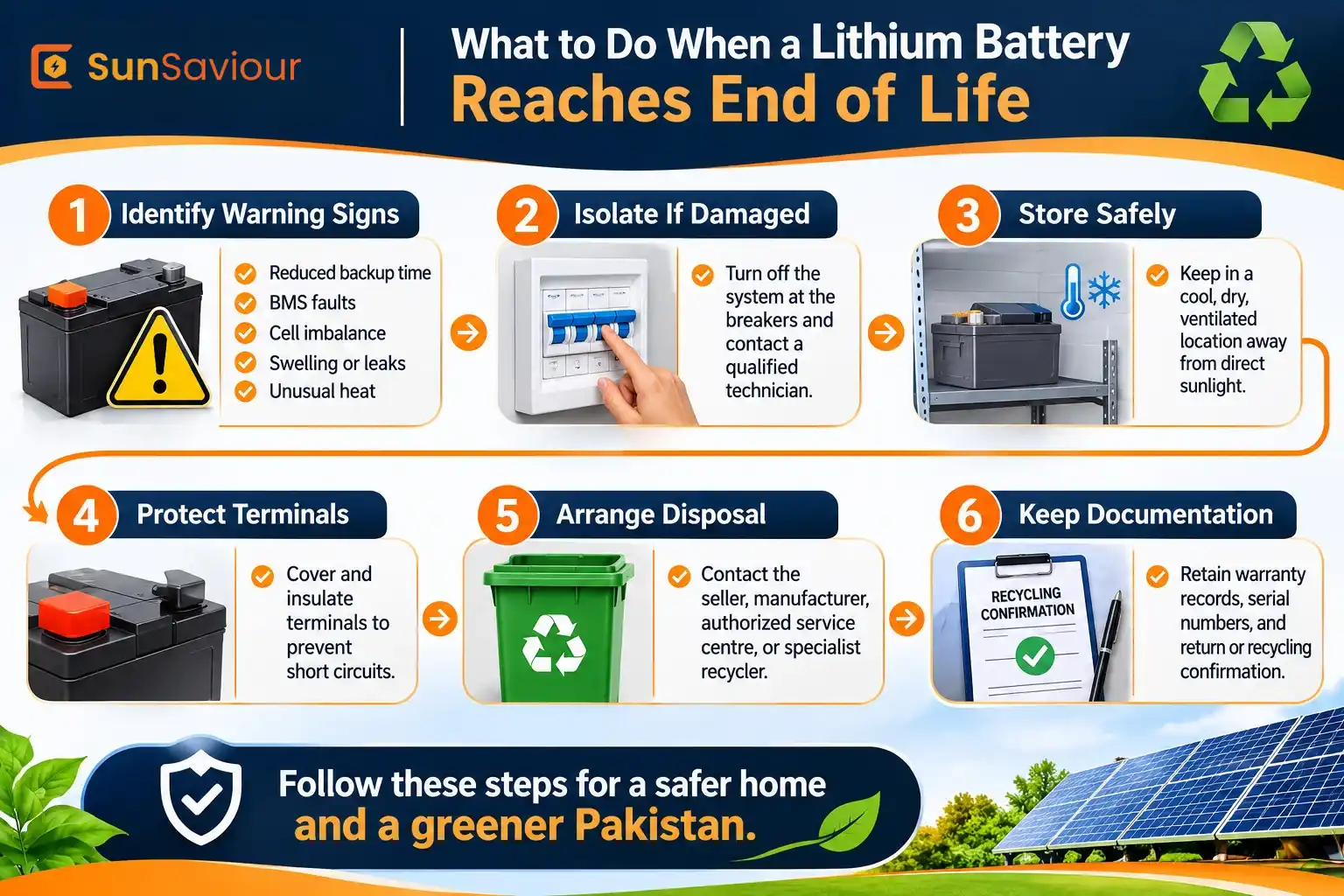
Understanding a lithium battery in pakistan context helps owners judge when to act. Battery makers usually define end of life as the point when usable capacity falls to around 80% of its original rating. In practice, owners notice the following:
- Backup time falls well below what it was when the system was new
- The battery repeatedly reaches low-voltage or cut-off alarms
- One or more cells show persistent imbalance even after a full charge
- The BMS logs repeated protection faults
- The case swells, leaks, or becomes hot during normal use
- A burning smell or visible damage appears
If you see swelling, leaking, smoke, or heat, isolate the system at the breakers and contact a qualified technician immediately. Do not attempt to open the pack.
Safe Storage While You Decide
If a lithium cell battery or pack is out of service but you have not yet arranged disposal, store it safely:
- A 12v 100ah lithium ion battery or larger pack should be stored in a cool, dry, ventilated area away from direct sun and away from flammable materials
- Keep it off the floor on a non-combustible surface
- Store it at a partial state of charge if the manufacturer’s guidance says so, rather than fully charged or fully empty
- Keep terminals covered and insulated to prevent accidental shorting
- Do not stack packs or store them in a sealed cupboard
- Check the pack periodically for swelling or heat
Do not store a damaged battery in a living area, a bedroom, or near the inverter.
Take-Back and Recycling Options
Specialist processing is available for a lithium phosphate battery pack, which is the same family as a lithium iron phosphate battery and other lithium chemistries, and a long life battery still reaches end of life eventually. Options for end-of-life lithium batteries vary by city and by supplier. Realistic routes include:
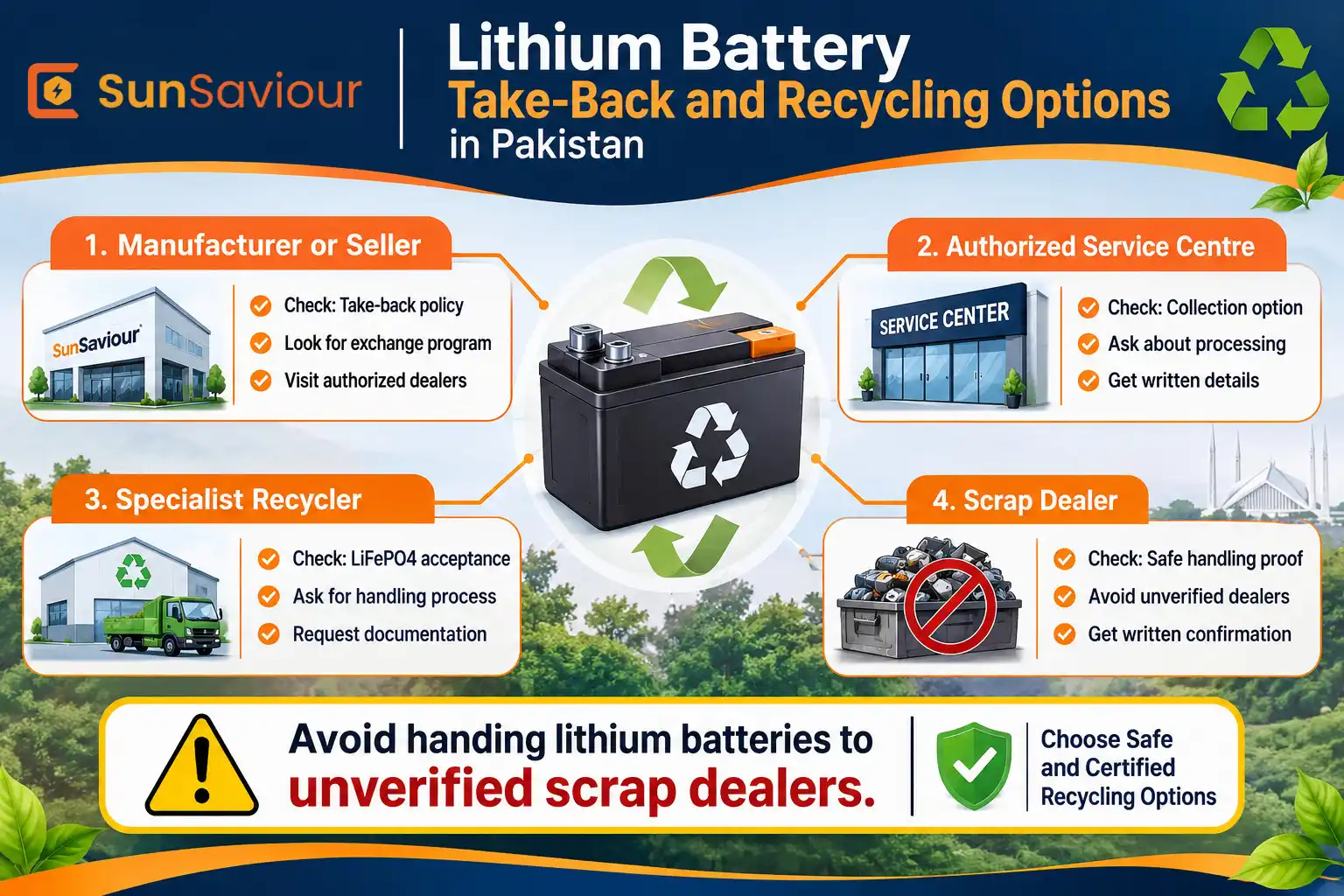
Return to the seller or manufacturer. Some suppliers offer take-back or exchange when you buy a replacement. Ask before you purchase, and get the arrangement in writing.
Authorized service centres. A service centre may be able to collect or process a faulty pack, especially where a warranty claim is open.
Specialist recyclers. Some companies accept lithium batteries for processing. Confirm that the recycler accepts LiFePO4 specifically, that it provides a collection or delivery arrangement, and that it can document how the batteries are handled.
Scrap dealers. Do not hand over lithium packs to general scrap dealers unless they confirm in writing how the batteries will be handled. Mixed scrap handling can expose workers and the environment to fire risk.
Check that any option you choose is legal and safe for your city. Requirements can change, so confirm with the relevant local authorities or the seller.
What to Ask a Seller Before Buying
A good seller will answer these questions before you pay:
- Does the company accept used or faulty packs for recycling or return?
- Is there a take-back arrangement, and is it free or charged?
- What happens to the warranty if the pack is returned?
- Who handles the collection, and how is the pack transported?
- Is the cell chemistry stated in writing, so the correct recycling route can be chosen?
- What documents or certificates support the claimed processing method?
Vague answers are a warning sign. A seller who plans for end of life is also more likely to support the product through its service life.
Warranty and End-of-Life Planning
A lithium ion battery 48v 100ah warranty should state its end-of-life terms in writing. Warranty terms usually cover defects and capacity retention over a stated period or number of cycles. Read the end-of-life provisions, not only the headline term. Some warranties require the original invoice, serial number record, and proof of correct installation to make a claim.
Keep these records in one place: purchase invoice, serial numbers, commissioning report, and warranty card. When the battery reaches end of life, these documents speed up a return, a replacement, or a claim.
Planning for Replacement
When a pack reaches end of life, decide the replacement before you remove the old one. Consider:
- Whether the hybrid solar inverter still supports the new battery’s voltage and communication protocol
- Whether the new pack should match the existing one in voltage and chemistry, or whether the system design should change
- How the old pack will be stored or returned until disposal
- Whether the replacement can be installed at the same time, to avoid an outage
Mixing old and new packs in one bank is not recommended. A 48 volt lithium battery pack should be replaced as a matched set where possible. Cells with different ages and capacity levels behave differently and can cause imbalance.
Environmental and Safety Considerations
Lithium cell battery packs contain metals and electrolytes that should not enter household waste or open dumping sites. Improper disposal can cause fires, contaminate soil and water, and expose workers to hazardous materials.
Recycling recovers valuable materials and reduces the need for new mining. It also keeps dangerous packs out of landfill. Choosing a documented recycling route is one of the simplest ways to reduce the environmental cost of a home solar system.
Common Mistakes at End of Life
- Throwing a lithium pack into household rubbish
- Storing a damaged pack in a living space
- Selling packs to unverified scrap dealers
- Leaving a swollen or hot pack connected to the system
- Mixing old and new packs without checking balance and compatibility
- Failing to keep warranty and serial documents
- Ignoring early warning signs until failure
Frequently Asked Questions
Can I throw a LiFePO4 battery in the bin?
No. Lithium batteries should not go into household waste. Use a documented take-back or recycling route.
How do I know if my lithium battery is dead?
Check usable capacity, alarm history, and cell balance in the monitoring system. A pack that delivers much less than its original backup time, or that fails repeatedly, is near end of life.
Is a swollen lithium battery dangerous?
Yes. Isolate the system, keep the area clear, and call a qualified technician. Do not try to repair or open the pack yourself.
Can I sell an old lithium battery for scrap?
Only if the buyer confirms in writing how the battery will be handled safely. Avoid general scrap dealers who cannot document this.
Do lithium batteries have a warranty for disposal?
Disposal is usually not covered by the warranty. Ask the seller about take-back arrangements before buying.
Can I mix an old pack with a new one?
It is not recommended. Different ages and capacity levels cause imbalance and reduce performance.
How long can I store an old pack before disposal?
Store it safely and check it regularly. Arrange disposal as soon as practical rather than leaving it indefinitely.
Does LiFePO4 need different handling from other lithium types?
Its chemistry is more stable, but all lithium packs need safe storage, isolation, and documented disposal. The same rules apply to every lithium batteries type in the home.
Conclusion
A lifepo4 battery can serve a home for many years, but its end of life needs planning as much as its purchase. Watch for early warning signs, store any faulty pack safely, and use a documented take-back or recycling route. Ask the seller about end-of-life arrangements before you buy, and keep your warranty records together so the process is simple when the time comes.
For SunSaviour battery support, take-back enquiries, and warranty guidance, visit sunsaviour.com or contact our service team with your battery serial number.