Introduction
A hybrid inverter is the single most important component in a modern solar system. It determines how your home manages solar generation, battery storage, grid connection, and backup power during load shedding — all simultaneously, all automatically.
Pakistan’s growing solar market now offers dozens of hybrid inverter options at a wide range of price points. Choosing the wrong one costs you money twice: once at purchase, and again in lost performance and poor support over the years that follow.
This guide covers everything — how to choose a hybrid inverter, how it compares to standard inverters, sizing rules, battery compatibility, hybrid inverter price in Pakistan, and the key factors that separate a genuinely good purchase from one that looks good on paper.
What Is a Hybrid Inverter and How Does It Work?
A hybrid solar inverter is a device that manages four energy flows in a single unit:
- Solar panels generating DC electricity
- Battery storage for backup and overnight use
- Grid connection for import, export, and net billing
- Home loads receiving clean AC power at all times
Unlike a standard solar inverter that only converts solar DC to AC and stops working the moment the grid fails, a hybrid inverter continues operating during outages by automatically switching to battery and solar power — typically within 10 to 20 milliseconds, fast enough that most appliances remain uninterrupted.
This makes the hybrid inverter vs normal inverter comparison straightforward for Pakistan: in a country with 4 to 10 hours of daily load shedding across most regions, a standard on-grid inverter that shuts down during outages solves only half the problem. A hybrid inverter solves both the bill reduction and the backup power challenge simultaneously.
Hybrid Inverter vs On-Grid Inverter vs Off-Grid Inverter
Understanding where hybrid inverter vs on grid and off-grid configurations differ helps you choose the right system type before selecting a specific unit.
Feature | On-Grid (String) Inverter | Off-Grid Solar Inverter | Hybrid Inverter |
Grid connection | Required | None | Optional |
Battery storage | Not supported | Required | Supported |
Works during outages | No | Yes | Yes |
Net billing support | Yes | No | Yes |
Best for Pakistan | Low load-shedding areas | Rural, no grid access | Most homes and businesses |
Upfront cost | Lowest | High (battery required) | Mid to high |
A hybrid solar inverter is the most versatile option. It connects to the grid for net billing, stores energy in batteries for backup, and can also be configured to operate fully off grid if needed. For most Pakistani buyers, hybrid is the correct default choice.
Does a Hybrid Inverter Need a Battery?
This is one of the most frequently asked questions in Pakistan’s solar market. The answer is: no, a hybrid inverter does not require a battery to operate.
A hybrid inverter can run in a battery-less mode, functioning identically to a standard on-grid string inverter. It generates solar power during the day, offsets your grid consumption, and exports surplus under NEPRA’s net billing framework.
However, without a battery, it shares the same limitation as an on-grid inverter: it shuts down during grid outages. The backup capability — which is the primary reason most Pakistani buyers choose a hybrid inverter — only activates when a compatible battery bank is connected.
The practical recommendation: If load shedding affects your area for more than 2 hours daily, install the battery alongside the inverter from the start. The hybrid inverter is designed for this from day one; adding battery later is possible but involves additional wiring costs and planning.
Key Factors to Consider When Buying a Hybrid Inverter
1. Phase Type: Single Phase or Three Phase
The first decision is determined by your grid connection, not your preference.
- Single phase hybrid inverter: For standard residential WAPDA connections. Suits systems from 3kW to 10kW. The correct choice for the vast majority of Pakistani homes.
- Three phase hybrid inverter: For properties with three-phase supply — most commercial premises, factories, hospitals, and large agricultural setups. Required for systems above 10kW and for sites running three-phase motors or pumps.
Check your WAPDA bill and meter before selecting any inverter. A three-phase inverter cannot be installed on a single-phase connection without a formal supply upgrade from your DISCO.
2. Inverter Capacity and Solar System Sizing
Correct solar inverter sizing uses the DC to AC ratio principle. The industry-verified sweet spot is a ratio of 1.15 to 1.25 — meaning your panel array should be 15 to 25% larger in DC capacity than the inverter’s AC rating.
What size inverter do I need for solar panels?
Daily Energy Use | Recommended System | Hybrid Inverter Size |
Under 15 kWh | 3 to 5kW panels | 3 to 4kW hybrid |
15 to 25 kWh | 5 to 8kW panels | 5 to 6kW hybrid |
25 to 40 kWh | 8 to 12kW panels | 8 to 10kW hybrid |
40 to 60 kWh | 12 to 16kW panels | 10 to 13kW hybrid |
Use a solar load calculator to determine your actual daily consumption before sizing. List every appliance, its wattage, and daily usage hours. A load calculation is the only reliable basis for system sizing — generic package sizes frequently mismatch actual household needs.
3. Battery Compatibility
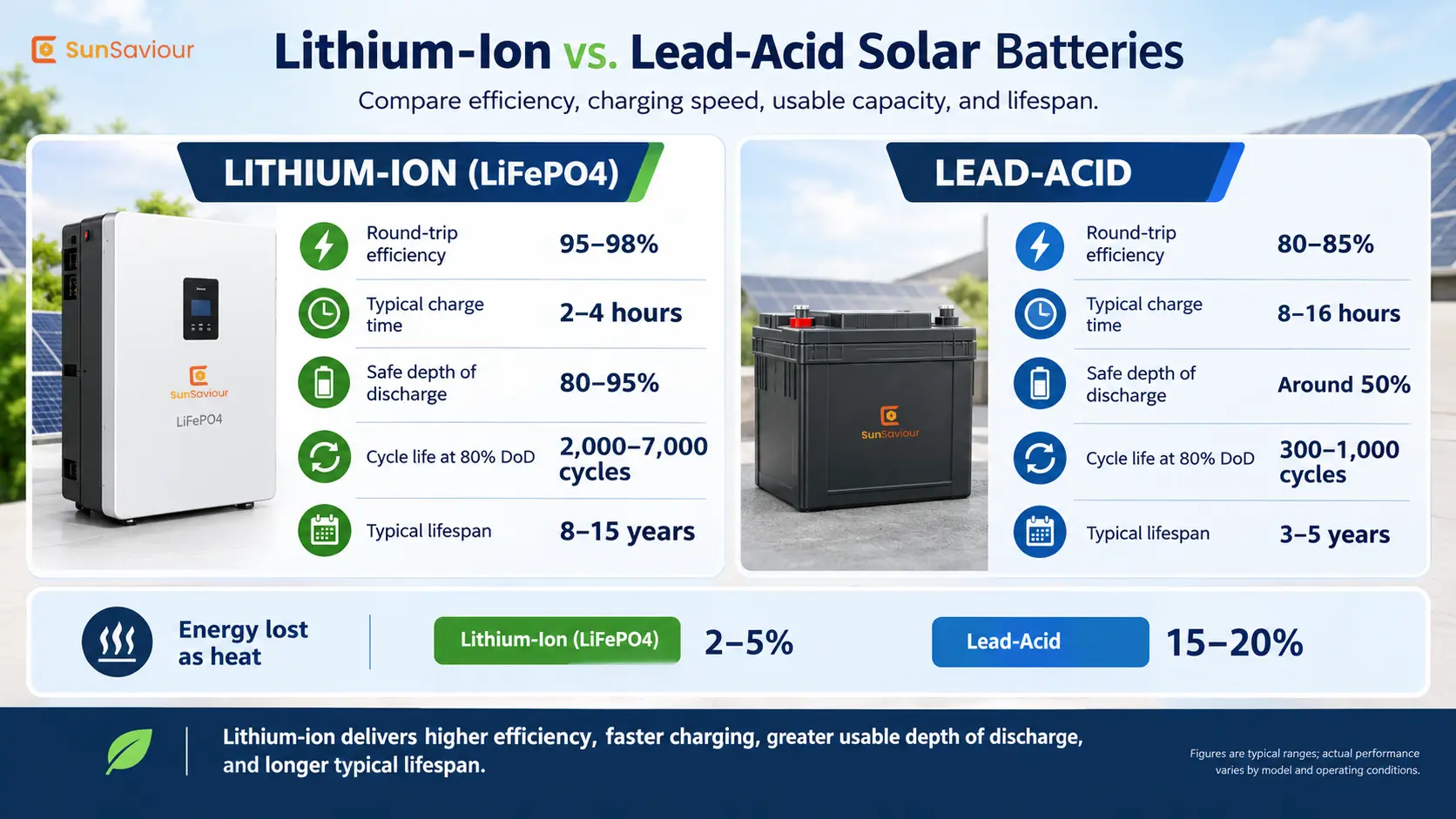
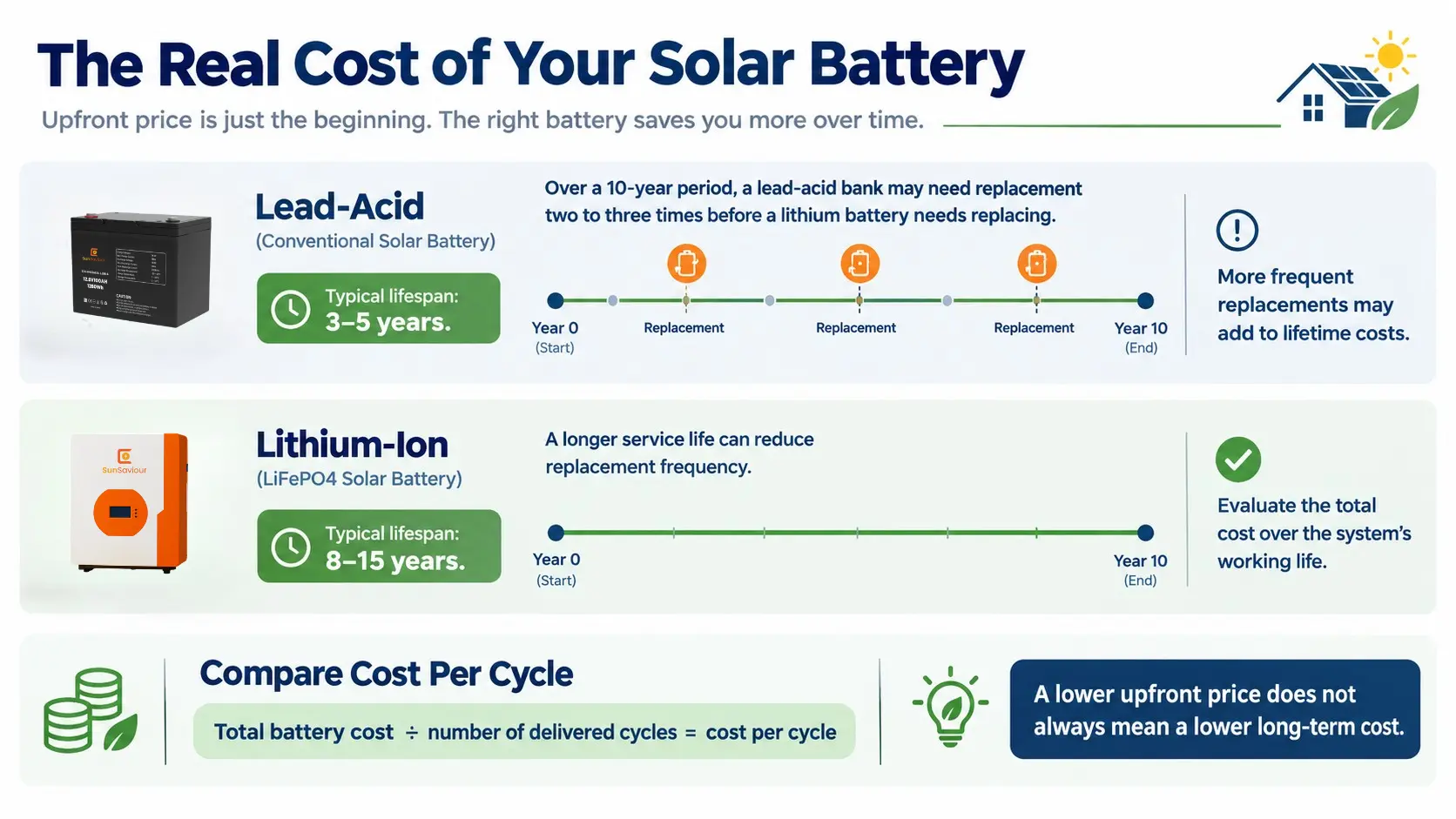
Not all hybrid inverters work with all battery types. For Pakistan’s solar market in 2026, LiFePO4 (lithium iron phosphate) is the recommended battery chemistry. Confirm these three things before purchasing:
- The inverter supports LiFePO4 via BMS communication (CAN or RS485 protocol)
- The inverter’s maximum battery charging current matches your battery bank’s specification
- The voltage range is compatible (most residential systems use 48V battery banks)
An inverter that does not communicate properly with the battery’s BMS cannot protect the battery from overcharge, over-discharge, or cell imbalance — shortening battery life significantly.
4. MPPT Inputs
Maximum Power Point Tracking (MPPT) extracts maximum power from your panels under changing light and temperature conditions. For Pakistani rooftops:
- Single MPPT: Adequate for rooftops with all panels facing the same direction in a single string
- Dual MPPT: Required for rooftops with panels on two different orientations, or where shading on one section should not reduce the output of another
A dual-MPPT hybrid inverter costs slightly more but prevents significant energy losses on mixed-orientation or partially shaded rooftops.
5. IP Rating and Heat Tolerance
Pakistan’s climate demands hardware that is specified for it. A hybrid inverter installed in a Pakistani home should carry:
- IP65 minimum for dust resistance — essential in Punjab, Sindh, and KPK where dust storms and smog seasons are normal
- Operating temperature range that covers at least 0 to 60°C
- Thermal derating behavior that is documented, not hidden in the datasheet
Inverters installed in direct sunlight on south-facing walls in summer can experience ambient temperatures above 50°C. At these temperatures, units without adequate thermal management derate their AC output automatically, reducing the energy your system delivers at exactly the hours when generation should be highest.
6. Monitoring and Remote Management
A quality hybrid inverter includes a monitoring platform accessible via mobile app and web browser. Key capabilities to look for:
- Real-time generation, battery state, and grid import/export data
- Fault alerts and error code notifications
- Historical performance data for trend analysis
- Remote parameter adjustment and firmware update support
Monitoring turns your solar system from a passive investment into one you can actively optimize and troubleshoot without a technician visit.
7. Warranty and Local Support
The most important factor that most buyers check last. For the Pakistani market specifically:
- Minimum 5-year warranty for the inverter unit
- Local warranty enforcement — a warranty only honored in the country of manufacture provides no practical protection in Pakistan
- Authorized dealer purchase — counterfeit and grey-market inverters are a documented problem in Pakistan’s solar market
- Service center presence in or near your city for physical support when needed
A hybrid inverter is the component your entire solar system depends on. Its support infrastructure matters as much as its specifications.
Hybrid Inverter Price in Pakistan (2026)
Based on verified 2026 market data from multiple Pakistani solar dealers, here are current price ranges for genuine branded products from authorized sources:
Type | Capacity | Approx. Price Range (PKR) |
Single phase hybrid | 3 to 5kW | 120,000 to 250,000 |
Single phase hybrid | 6 to 8kW | 220,000 to 380,000 |
Single phase hybrid (IP65) | 10kW | 350,000 to 550,000 |
Three phase hybrid | 10 to 15kW | 450,000 to 750,000 |
Three phase hybrid | 20 to 30kW | 700,000 to 1,200,000 |
Hybrid inverter price in Pakistan varies by brand tier, IP rating, warranty length, MPPT configuration, and whether the unit includes monitoring hardware. Prices significantly below these ranges for named brands warrant authenticity verification before purchase.
SunSaviour’s ALPHA Series, V-Series, X-Series, and X-Plus hybrid inverter range covers 3kW to 30kW for residential and commercial applications in Pakistan. Explore SunSaviour hybrid inverters at sunsaviour.com
How to Choose a Hybrid Inverter: The Decision Checklist
Before finalizing any purchase, confirm every item on this list:
System requirements:
- Daily load calculated using a solar load calculator or appliance list
- Inverter capacity selected at a DC to AC ratio of 1.15 to 1.25
- Phase type confirmed against your WAPDA connection
Technical specs:
- LiFePO4 BMS communication supported (CAN or RS485)
- MPPT input count matches your roof layout
- IP65 or higher confirmed for Pakistan’s dust environment
- Operating temperature range covers Pakistan’s summer conditions
Commercial verification:
- Purchased from an authorized dealer with original documentation
- Serial number verifiable through the manufacturer’s database
- Warranty enforced by a local entity with a physical presence
- After-sales service process confirmed before payment
Frequently Asked Questions
What is a hybrid inverter?
A hybrid solar inverter is a device that manages solar panels, battery storage, and grid connection simultaneously from a single unit. It provides backup power during load shedding, maximizes solar self-consumption, and supports net billing — making it the most complete inverter option for Pakistani homes.
Hybrid inverter vs normal inverter: what is the difference?
A normal on-grid inverter converts solar DC to AC and shuts down during grid outages. A hybrid inverter continues operating during outages by switching to battery power, manages battery charging and discharging, and coordinates all three energy sources automatically.
Does a hybrid inverter need a battery?
No. A hybrid inverter operates without a battery in grid-tied mode. However, without a battery it shuts down during outages like a standard on-grid inverter. Battery storage is required to activate the backup power capability that most Pakistani buyers need.
What is the best hybrid inverter in Pakistan?
The best hybrid inverter in Pakistan for your situation depends on your phase type, system size, load-shedding hours, battery plans, and budget. Key criteria are LiFePO4 compatibility, dual MPPT, IP65 rating, local warranty support, and an authorized dealer purchase.
How do I size a hybrid inverter for my home?
Calculate your daily energy consumption using a solar load calculator. Size your panel array to cover that load, then size the inverter at 80% of the panel DC capacity (a 1.25 DC to AC ratio). For a typical 3-bedroom Pakistani home, a 5 to 8kW hybrid inverter is a common starting point.
What is the hybrid inverter price in Pakistan?
A quality single phase hybrid inverter in Pakistan starts at approximately PKR 120,000 for a 3kW unit and ranges to PKR 550,000 for a 10kW IP65-rated unit from authorized dealers. Three-phase commercial units range from PKR 450,000 to over PKR 1,200,000 depending on capacity and specification.
Can a hybrid inverter work off-grid?
Yes. Most hybrid inverters support an off-grid operating mode when a battery bank is installed, functioning independently of the grid entirely. This makes them suitable for rural locations without grid access as well as urban homes that want complete energy independence.
Conclusion
A hybrid inverter is not the place to cut costs in a solar system. It is the component that determines how every other part of the system performs — whether your batteries charge correctly, whether your home stays powered during load shedding, whether your net billing exports happen efficiently, and whether you can identify and resolve problems before they become expensive failures.
The best hybrid inverter in Pakistan for your home is the one correctly sized for your load, compatible with your battery chemistry, rated for Pakistan’s heat and dust conditions, purchased from an authorized dealer, and backed by a warranty that is actually enforceable locally.
Use the checklist in this guide before making any purchase. The few hours spent getting this decision right pay dividends across the 10 to 15-year operational life of the inverter.
SunSaviour supplies hybrid inverters and lithium battery storage solutions for homes and businesses across Pakistan, backed by 59+ sales points and 28 service centres nationwide. Visit sunsaviour.com to find the right hybrid inverter for your system.